
Ashleigh’s Family
Ellie, Year 4
Lewis, Year 2

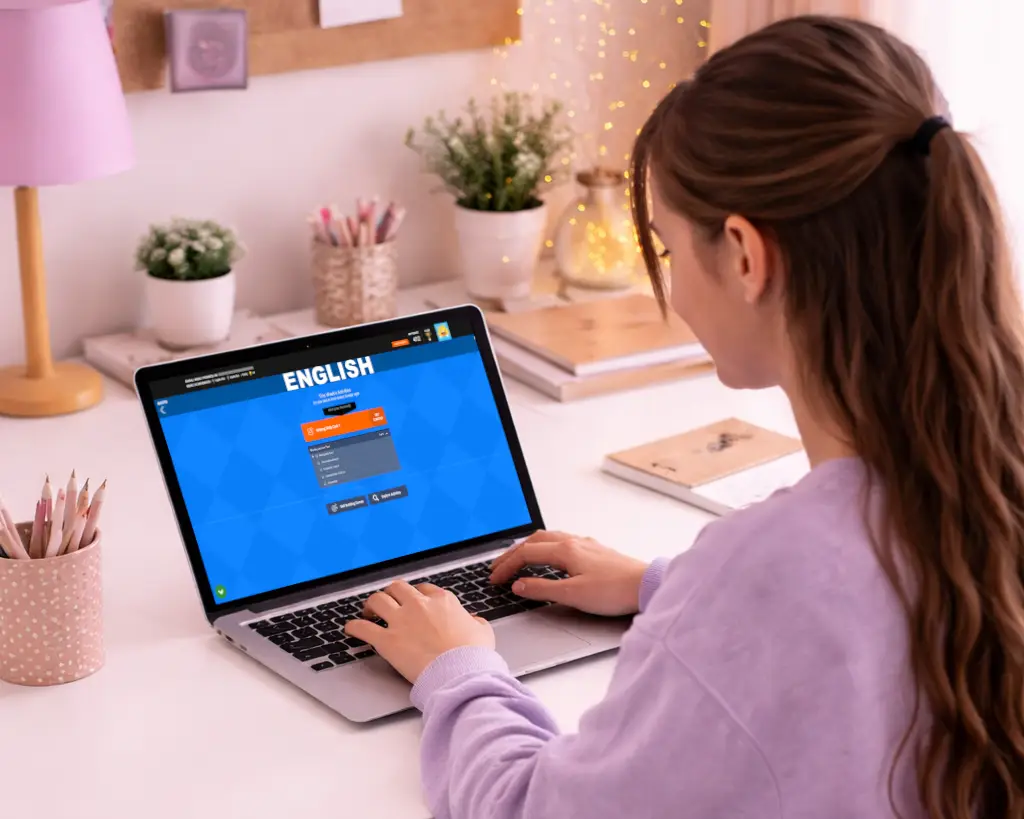
Ellie, Year 4
Lewis, Year 2
Real Stories from Real Families
Parent
Ashleigh
Students
Ellie and
Lewis
Year Levels
Year 4 and
Year 2
Ashleigh came to Kinetic Education looking for support for her children, Ellie and Lewis.
Ellie is in Year 4 at a mainstream private school. As the work became more challenging each year, Ashleigh could see that she was finding it harder to keep up and needed extra support to rebuild her confidence.
Lewis is in Year 2 and is homeschooled, so his learning routine looked a little different from Ellie’s.
Ashleigh first looked into local, in-person tutoring, but the closest option was more than 45 minutes away. After a full school day, travelling that far for a set weekly class wasn’t realistic for their family, physically or emotionally.
That’s when she started looking for an online option that could support Ellie and Lewis in a more flexible way.
One of the things that stood out to Ashleigh was her first conversation with our consultant, Amber.
With Ellie and Lewis having different learning needs, Ashleigh wanted to understand how Kinetic Education could support each of them individually. She was able to ask specific questions about their diagnoses, how they learn and what tutoring could look like for their family.
Amber took the time to listen and explain how learning would be tailored for Ellie and Lewis, how their tutors could support them and how Kinetic Education could fit flexibly around family life. By the end of the call, Ashleigh felt confident that both Ellie and Lewis had been understood.
During their two weeks free, Ellie completed the Maths Doctor assessment. The results gave Ashleigh a clearer picture of Ellie’s learning by showing the skills she already understood, along with the earlier gaps that were affecting her current schoolwork.
From there, Ellie’s personalised learning plan was created to target those gaps and help her strengthen the skills she needed, step by step.
Six months later, Ellie completed the assessment again. Ashleigh printed both sets of results so she and Ellie could compare them side by side and clearly see how much progress she had made.
For Ellie, it was a reminder that even when progress wasn’t always obvious day to day, she really was moving forward and closing those earlier gaps.
When your child starts with Kinetic Education, we assess them across key areas of the Australian Curriculum to understand where their learning currently sits. From there, we provide a clear report that helps you see what they have already achieved, where support may be needed, and what they are ready to work on next.
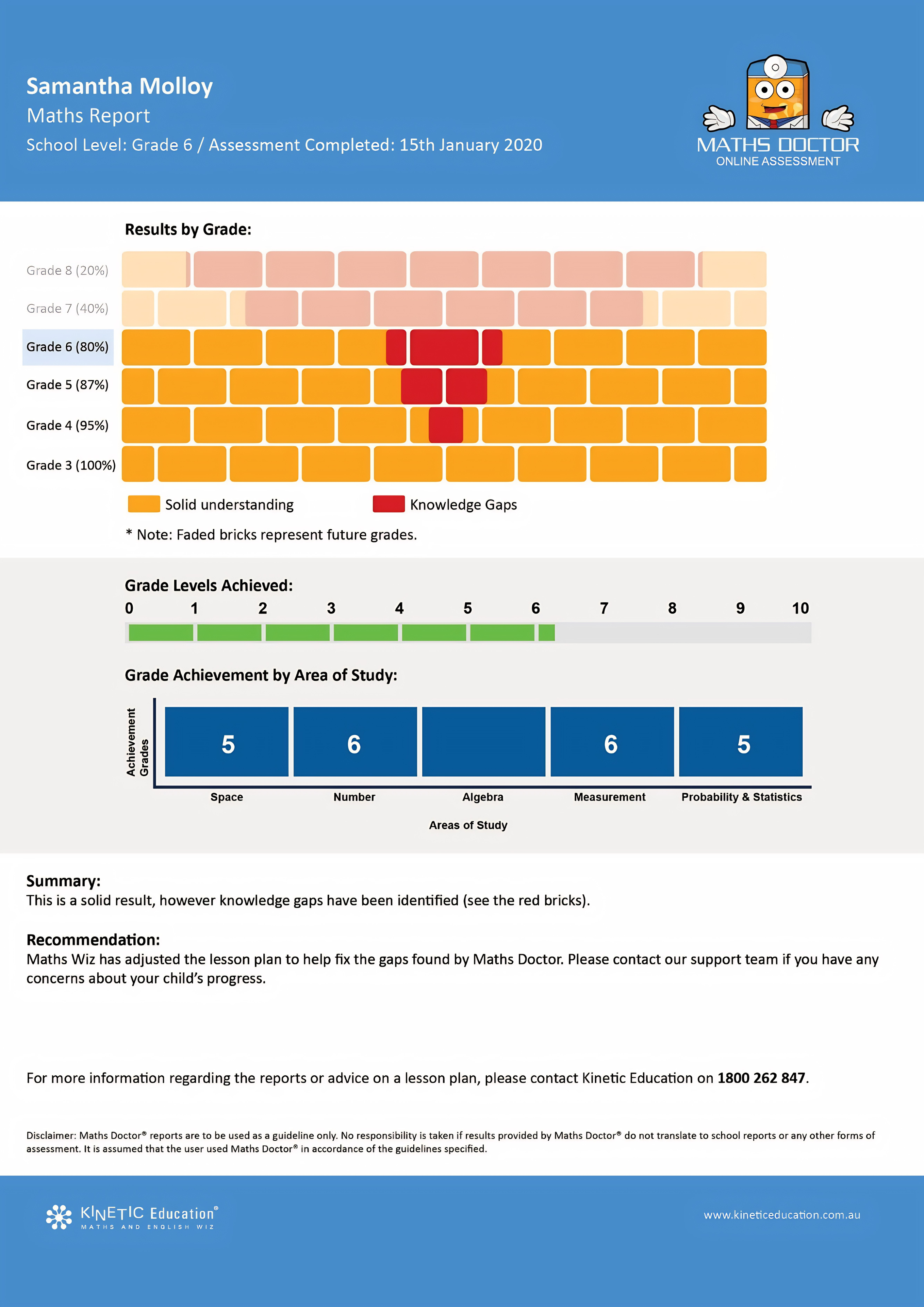
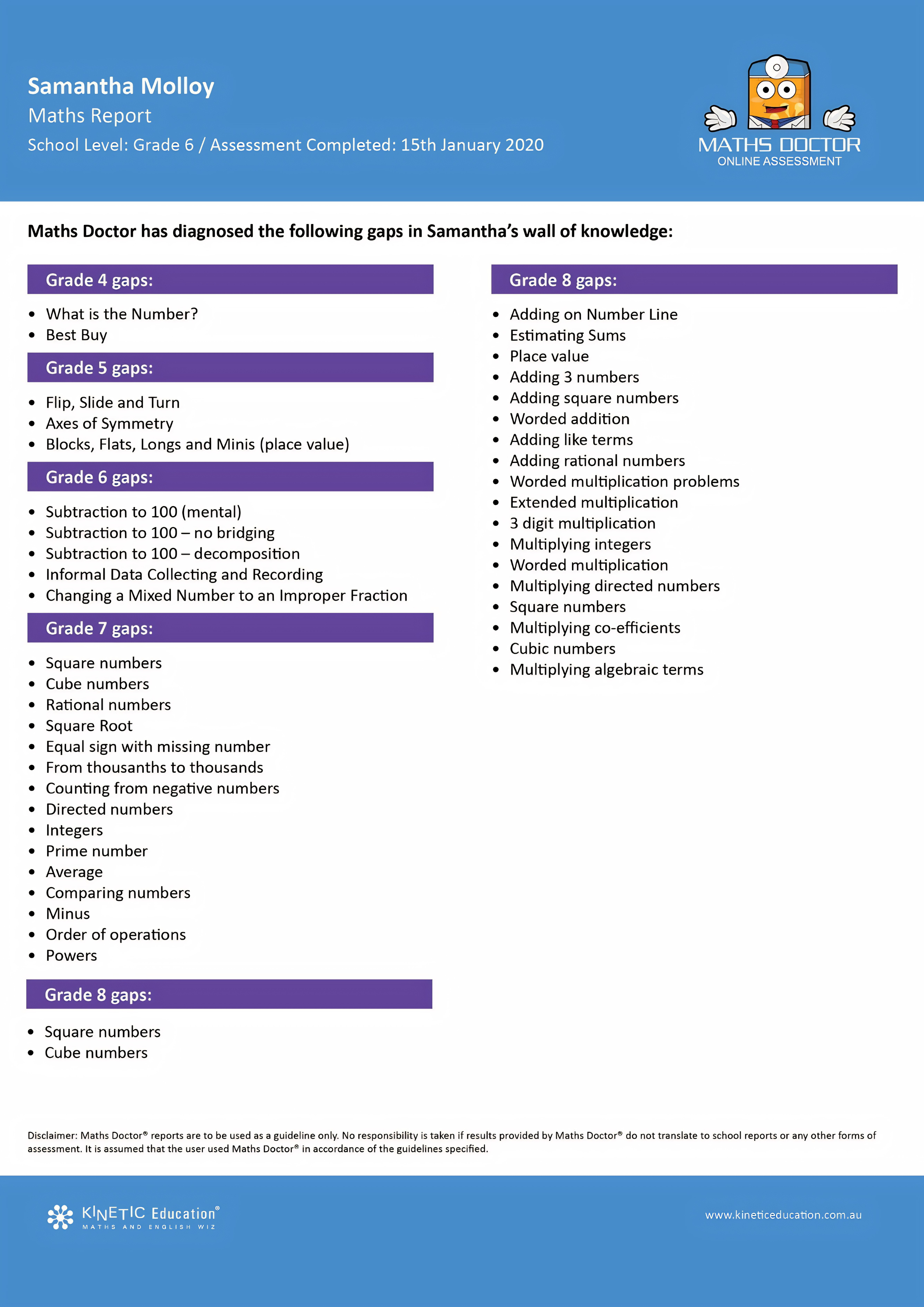
The brick wall shows the areas within the curriculum your child has already achieved, while the red sections highlight where support may be needed.
Our reports help you see what your child has already achieved, where support may be needed, and what they are ready to work on next.
Each area we assess is aligned with the Australian Curriculum, giving you a clear picture of where your child’s learning sits.
Your child’s initial assessment, ongoing assessments, and weekly progress help guide their weekly lesson plan, so it is always targeted to their needs.
The shorter lessons quickly proved to be a much better fit for Ellie and for family life.
After a full day at school, an hour-long tutoring session, along with the travel time, simply wasn’t realistic. With Kinetic Education, Ellie can log in at a time that suits her, without rushing out the door or needing to meet a strict weekly time slot.
Across the week, she still completes that extra hour of learning, but in shorter sessions that feel much more manageable. Because Ellie isn’t racing the clock or becoming emotionally overwhelmed, she can focus on what she is learning and take more of it in.
During the two week experience period, Ashleigh wanted to give Kinetic Education a proper go, so the family committed to completing learning each day.
This gave Ashleigh the chance to see how Kinetic Education would actually work at home and whether it would fit into their family’s routine.
With Ellie, Ashleigh began noticing little changes quite quickly. Things that had felt confusing at school were starting to make more sense. For Ashleigh, that was a big moment. She could see Ellie beginning to understand why she had found certain things difficult, and the idea of receiving extra support started to feel less scary for her.
After school, Ellie comes home, grabs a snack and sits down to complete around 15 to 20 minutes of learning.
Because Ellie has auditory processing difficulties, shorter, focused sessions work much better for her than one long session. Breaking the learning up across Monday to Friday helps her stay focused without becoming overwhelmed or losing interest.
After a full day at school, Ellie can complete what she needs to do and then enjoy the rest of her afternoon. It keeps learning manageable and gives her a routine she can stick to.
Each morning, Lewis jumps online and spends around 30 minutes working through his Maths and English learning plan. Having a clear weekly plan gives him a sense of independence, as he knows what to work on and can complete his lessons by himself.
Ashleigh also uses Lewis’ Kinetic Education lessons to help guide their broader homeschooling. If he is learning the letter B with Kinetic, they use that as a starting point for other activities throughout the week. This gives their learning direction and helps Lewis apply what he has learned across other areas of the curriculum.
At Kinetic Education, we know every child learns differently, so their learning plan can be adapted to suit their individual needs.
For Ellie, this meant going back and identifying the earlier gaps that were making her current schoolwork more difficult. Her tutor added activities to strengthen those foundational skills and broke confusing concepts into smaller, simpler steps. This helped things begin to make sense and gave Ellie more confidence in her ability.
Lewis has a working memory deficit, which means too much information at once can sometimes feel overwhelming. When this happens, Ashleigh can simply contact their tutor and ask for his learning to be slowed down. This gives Lewis more time to revisit concepts and work through them at a pace that feels manageable.
For Ashleigh’s family, Kinetic is a long-term solution. It’s something they plan to continue throughout Ellie and Lewis’ schooling, helping make sure that any small gaps that pop up are addressed early, before they have the chance to grow.
If Ellie begins to struggle with something at school, Ashleigh knows Kinetic is there to step in and provide extra support before it becomes overwhelming. For us, it’s important that students feel supported when new concepts come up and know there is something in place to give them the extra help they need.
Yes. Each your child’s learning is personalised to their current level and individual needs. Tutors can adjust the learning plan, add activities to strengthen earlier skills and slow the pace down when your child needs more time with a concept.
Most activities take around 15 to 20 minutes. Your child can spread their learning across the week, making it easier to stay focused and fit tutoring around school and family life.
Yes. Your child’s weekly Maths and English learning plan can support their broader homeschooling routine. Ashleigh uses Lewis’ lessons as a starting point for other learning activities throughout the week.
The assessment helps identify the skills your child already understands and any earlier gaps affecting their current learning. The results are then used to create a personalised learning plan targeting the areas where your child needs support.
Every child is different, but Ashleigh began noticing small changes in Ellie during the two-week experience period. Ongoing assessments and progress reports will help you see the skills your child is building and the gaps they are closing.
* By entering your details, you give Kinetic Education permission to contact you to discuss its tutoring via phone and/or email and record such communication for training and compliance purposes. You understand that the 2 weeks free tutoring is only available to children that have not previously received any free tutoring from Kinetic Education.