Members Login Book a Free Demo

How We Help Your Child Feel More Confident with Maths Word Problems

Word problems can be difficult because children are required to use reading, reasoning and maths at the same time. They need to understand what the question is asking, work out which information matters, and decide which maths skill to use.
It can also become more challenging if your child has missed an earlier skill. Word problems often rely on number facts, operations, fractions, measurement, money, time and problem solving. If those foundations are not strong, it can be hard to know where to start.
That’s why it’s so important to find and fix any gaps, so your child can build confidence with word problems. When the foundations are stronger, they can slow down, understand the question and choose the right strategy more easily.

Assessment first

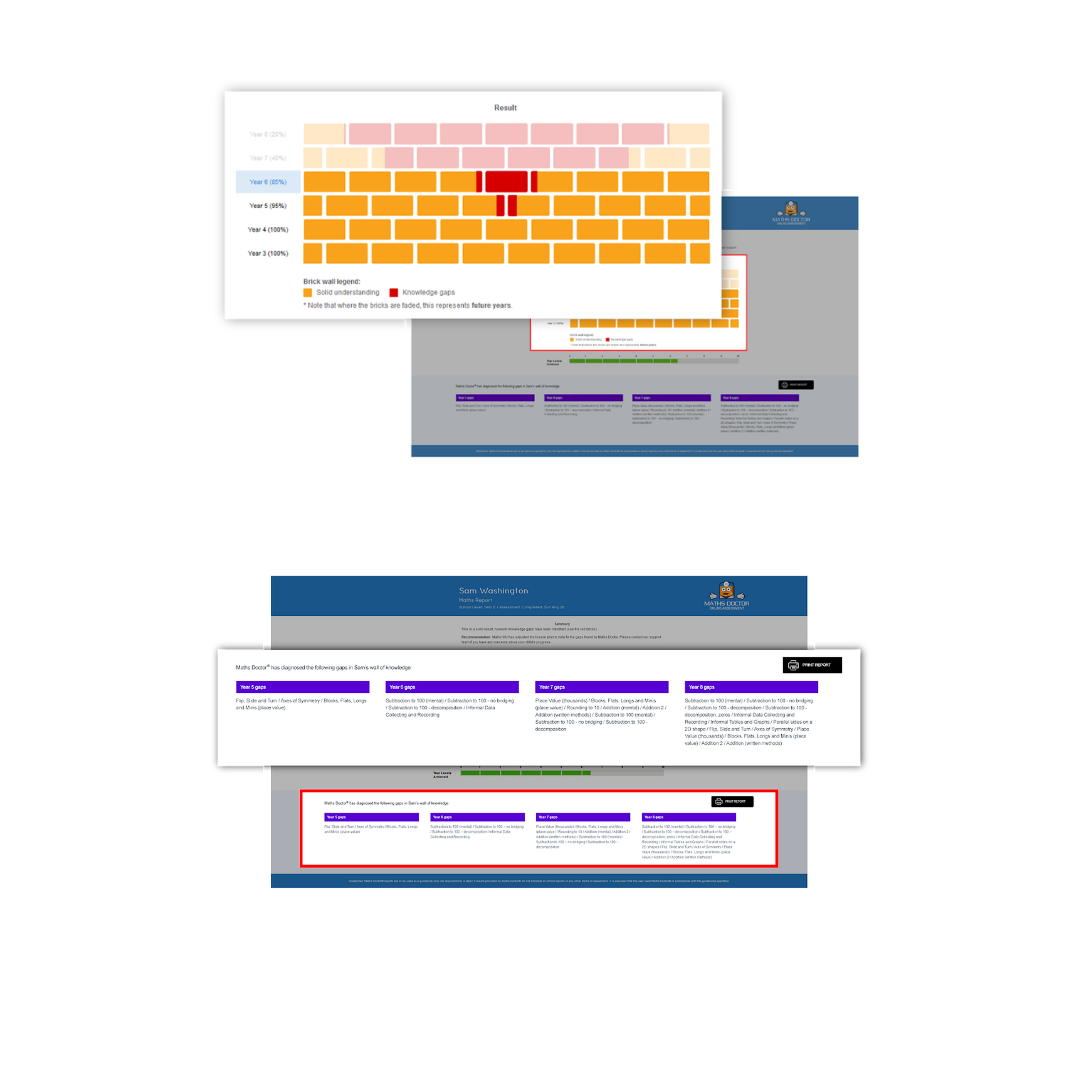
We start with an assessment to understand your child’s current maths level, identify any gaps in understanding across multiple year levels of the Australian Curriculum, and see where they are ready to move ahead. From there, we create a personalised weekly learning plan tailored to their needs.

Personalised Learning Plans

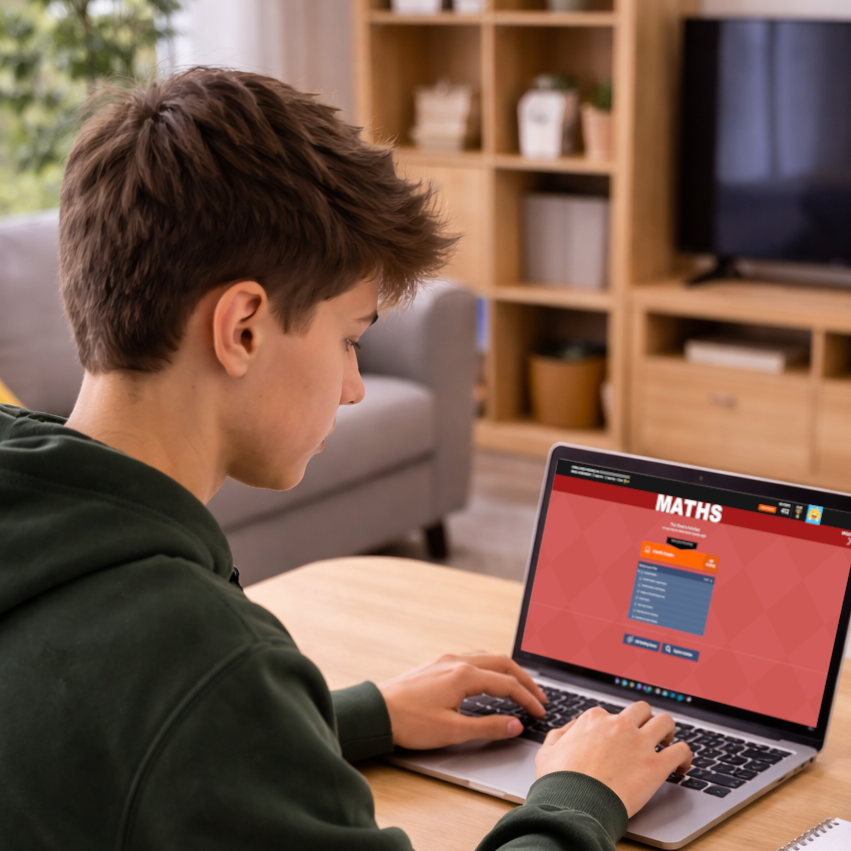
Your child’s personalised learning plan is delivered weekly and can be completed at home on a tablet or computer. Each Monday, new 20-minute maths lessons are added based on your child’s progress, helping keep learning at the right level and supporting a consistent learning routine.

Proven Progress

As your child strengthens their foundations, you’ll see them build skills and confidence in maths, and keep moving forward at a pace that feels right for them.

Expert Tutors Available

If your child needs extra support, our online maths tutors are there to explain concepts further and answer questions, so your child can continue with confidence.

Word Problems: How These Skills Develop and How We Help

Word problems appear at every level of the Australian Curriculum, growing in length and complexity as children move through school. The overview below shows how these skills develop over time and how Kinetic Education can support your child at each stage.

Every child develops these skills at their own pace, so we begin with an assessment to find where your child is really at, then build a personalised learning plan from the right level.

This means your child can strengthen any earlier gaps while continuing to work through curriculum-aligned lessons at a pace that suits them.

Year Level
What the Curriculum Covers
How Kinetic Helps
Foundation – Year 2
Children solve simple one-step problems, often using objects, pictures or familiar stories. These usually involve adding, taking away, sharing or grouping.
We use pictures, objects and situations your child already recognises, so they can picture what a question is describing before working out the maths. At this stage the reading matters as much as the adding.
Year 3 – Year 4
Children begin solving one-step and two-step problems, including questions involving money. They also start deciding which operation a question needs, rather than being told what to do.
Choosing the operation is the new skill here, and it is where a lot of children stall. We give your child a repeatable way to work out what a question is actually asking, then plenty of practice applying it across money and everyday situations.
Year 5 – Year 6
Problems become more multi-step and often include fractions, decimals, percentages, measurement, money and time. Understanding what the question is really asking becomes an important skill.
Multi-step questions ask a child to hold several things in mind at once. We break them into stages, and if fractions, decimals or measurement are part of what is making them hard, the learning plan strengthens those first.
Year 7 – Year 8
Students solve multi-step problems across different topics, including early algebra, rates and ratios. They also begin showing their reasoning more clearly.
We work on problems that span algebra, rates and ratios, and on setting out reasoning clearly rather than jumping to an answer. Where slow arithmetic underneath is getting in the way, we strengthen that alongside.
Year 9 – Year 10
Students work through more complex multi-step problems, use maths to model real situations, and explain or justify their answers.
We help your child approach complex problems methodically, use maths to model real situations and explain why an answer makes sense. When something is not clicking, their tutor can work through it with them on a shared whiteboard.

Trusted by Thousands of Happy Families  

Skip to end of cards

Melanie

After years of struggling with maths, Melanie’s daughter boosted her grades and confidence in just a few months with Kinetic Education. She has made so much progress that her new teacher didn’t even realise she had struggled with maths in the past.

Louise

Louise’s daughters started the school year feeling anxious to go to class, worried they wouldn’t understand maths concepts. But in just 4 months, their confidence has grown, and they are now happy to go to maths classes at school. Not only this, but their school reports and grades have boosted, but most importantly their confidence has too!

Rosie

Rosie came to Kinetic Education looking for support for her two children, who both needed completely different support. Her daughter was really struggling with maths, and homework time was always stressful, while her son was one step ahead at school and starting to feel bored. With support from us, Rosie’s daughter is now able to work through new concepts confidently, and her son gets the challenges he needs to stay one step ahead.

Maths Tutoring Starts with Identifying Your Child’s Level

When your child gets started with Kinetic Education, their first step is completing our Maths Doctor assessment. This checks their maths skills across multiple year levels of the Australian Curriculum, including fractions, decimals and percentages.

The assessment helps us understand their current skills, identify any earlier gaps that may be making these topics more difficult and see where they are ready to move ahead.

It takes up to 45 minutes and gives us a clear starting point for your child’s personalised weekly learning plan. From there, we can strengthen the right foundations while helping them continue working through the curriculum at a pace that suits them.

Personalised learning

At Kinetic, problem solving runs through your child's personalised learning plan from the very beginning, woven into every topic rather than taught on its own, as part of a complete maths program aligned to the Australian Curriculum. Here is how it works:

Every Monday, we update your child’s learning plan with new maths activities for the week, selected around their assessment results and progress. Their learning plan moves through three stages: Revision and Catch-Up, Consolidation, and Extension.


Skip to end of cards

Revision and Catch-Up

When your child first starts with Kinetic Education, their learning plan targets the knowledge gaps identified in their assessment. This may mean revisiting earlier fractions, decimals or percentages skills and strengthening the foundations they need before moving into more complex work.

Consolidation

As your child builds their understanding, their learning plan continues to reinforce the skills they are currently working on. Regular practice helps them use maths skills across the curriculum, including fractions, decimals and percentages, with more confidence and apply what they have learned to different types of questions.

Extension

When your child is ready to move ahead, their learning plan introduces more challenging maths across the curriculum, including fractions, decimals and percentages. This helps them extend their understanding, build confidence and apply their skills to more complex questions and real-world maths.

Personalised Learning with Real Tutor Support

Our interactive lessons break each idea into clear steps using pictures, animations, text and audio. Your child can build problem-solving skills across the curriculum, from simple one-step questions through to more complex multi-step problems.

If your child needs extra help, their tutor can step in. Using screen sharing and a digital whiteboard, tutors can support them with word problems and other maths concepts in real time. Tutor support is available after school, Monday to Thursday, up to 10 hours per week, at no extra cost.

Parent support: You do not have to wonder how your child is going. Each week you receive a report on what they have worked on and how they are progressing, and you can call the Parent Helpline to speak directly with their tutor.


Trusted by 100,000+ Australian Families

Rewards

Every activity your child completes earns points they can save and swap for real rewards, including Smiggle, Myer and WISH gift cards. That extra bit of motivation helps children keep going through the problems they once found hard.

Pricing

Word problems are included as part of Kinetic Education’s maths support. Starting from $29 per week for the family, Kinetic Education includes the full Australian Curriculum assessment, a personalised weekly learning plan, access to all lessons and activities, tutor support up to 10 hours per week, weekly progress reports and the Parent Helpline. New families receive their first two weeks free.

FAQs

Why does my child find word problems so much harder than normal sums?

Word problems ask for two things at once: understanding the situation, then choosing the right maths. A child can be confident with the calculation itself and still struggle to work out what the question wants. Our lessons build both skills together.

How do you help a child who freezes on word problems?

We teach a clear, repeatable approach: read the question carefully, find the important information, decide which maths to use, then check the answer makes sense. Practising this across many problems helps it become a habit your child can rely on.

Are word problems important for NAPLAN? 

Yes. Much of NAPLAN maths is set in real-life contexts, so children need to read a question, work out what it is asking and apply the right skills. Building this ability helps with NAPLAN and with maths across the board.

How are word problems taught in the lessons? 

Each problem is broken into clear steps using visuals and instant feedback, so your child learns how to approach a question, not just find an answer. Tutors are available to talk through any problem using screen sharing and a digital whiteboard.

How much does it cost? 

Kinetic's maths support builds problem-solving skills alongside the other key areas of the Australian maths curriculum. It starts from $29 per week for the family, and your first two weeks are free.

Can I speak to someone about my child's specific needs before getting started? 

Yes. When you book your free demonstration, we’ll chat about how your child is currently going with their learning, what they’re finding difficult and how Kinetic Education could support them.

Get Your First 2 Weeks Free

Start today with your free demonstration

  • Personalised lessons in Maths & English
  • Live Australian tutors
  • Fun rewards to keep kids motivated as they learn
  • From just $29/wk for the family*

Limited Spots

* By entering your details, you give Kinetic Education permission to contact you to discuss its tutoring via phone and/or email and record such communication for training and compliance purposes. You understand that the 2 weeks free tutoring is only available to children that have not previously received any free tutoring from Kinetic Education.