Members Login Book a Free Demo

How We Help Your Child Feel More Confident with Algebra

Algebra can be difficult because it asks children to think about maths in a more abstract way. Instead of working only with numbers, they need to understand patterns, unknown values, symbols, equations and graphs.

It can also become more challenging if a child has missed something from a previous year level. Algebra builds on skills like number facts, fractions, multiplication, division and negative numbers. If your child’s maths foundations aren’t strong, even one missing skill can make new algebra concepts feel much harder than they need to.

That’s why it’s so important to find and fix those gaps, so your child can build confidence in algebra. When the foundations are stronger, algebra becomes much easier for children to understand and build on.

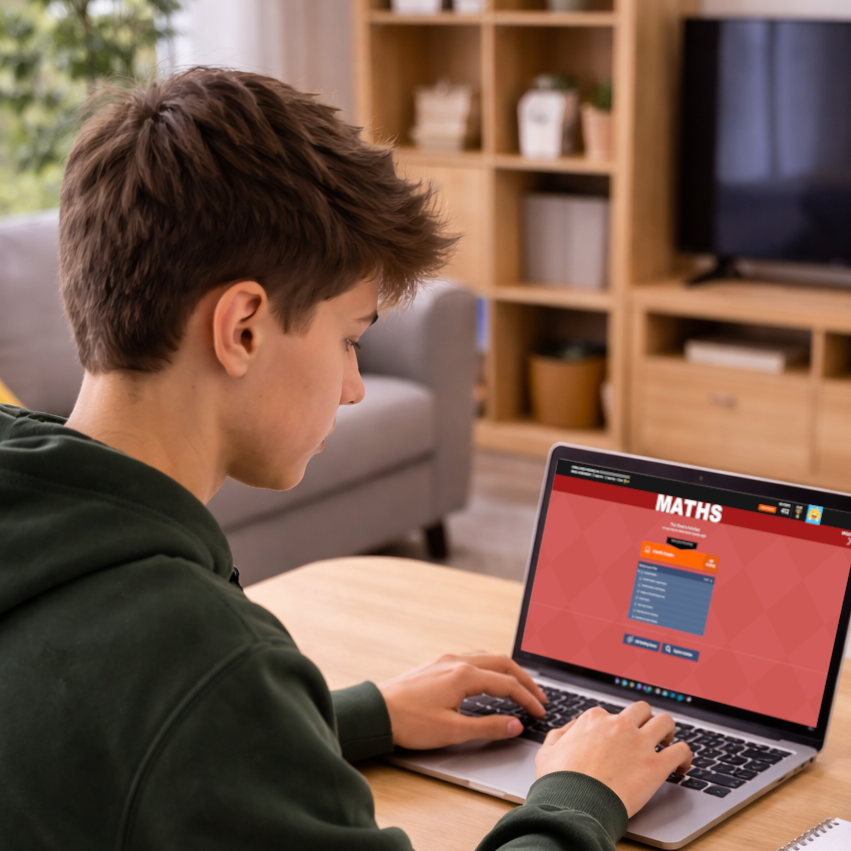
Assessment first

We start with an assessment to understand your child’s current maths level, identify any gaps in understanding across multiple year levels of the Australian Curriculum, and see where they are ready to move ahead. From there, we create a personalised weekly learning plan tailored to their needs.

Personalised Learning Plans

Your child’s personalised learning plan is delivered weekly and can be completed at home on a tablet or computer. Each Monday, new 20-minute maths lessons are added based on your child’s progress, helping keep learning at the right level and supporting a consistent learning routine.

Proven Progress

As your child strengthens their foundations, you’ll see them build skills and confidence in maths, and keep moving forward at a pace that feels right for them.

Expert Tutors Available

If your child needs extra support, our online maths tutors are there to explain concepts further and answer questions, so your child can continue with confidence.

Algebra: What’s Covered and How We Help

Algebra builds across multiple year levels of the Australian Curriculum, starting long before letters and equations appear. The overview below shows how these skills develop over time and how Kinetic Education can support your child at each stage.

Every child starts from a different point, so we begin with an assessment and create a personalised learning plan based on their current understanding.

This means your child can strengthen any earlier gaps while continuing to work through curriculum-aligned lessons at a pace that suits them.

Year Level
What the Curriculum Covers
How Kinetic Helps
Foundation – Year 2
Children begin by copying, continuing and creating patterns. They count in steps and start working with simple number sentences, including finding missing numbers.
We use clear visual examples and interactive activities to help your child recognise and continue patterns, count confidently in steps and work out what is missing from a simple number sentence.
Year 3 – Year 4
Children explore number patterns, rules and relationships. They begin to understand equivalence and use the equals sign correctly, which helps prepare them for equations later on.
We spend time on what the equals sign actually means, because a shaky understanding here causes real difficulty in high school. Your child practises finding the rule in a pattern and describing how numbers relate to each other.
Year 5 – Year 6
Children work with more complex patterns, order of operations and unknown values in number sentences. They begin to spot rules and describe how numbers change.
We break order of operations and unknown values into manageable steps, and if the assessment shows an earlier gap in pattern work or number facts, we strengthen that first so the new work has something solid to sit on.
Year 7 – Year 8
Students start working more formally with algebra. They use letters as pronumerals, write and simplify expressions, substitute values, collect like terms and solve simple linear equations. They also begin using index laws and plotting points on the Cartesian plane.
This is where algebra turns abstract and where many students first feel lost. We teach expressions, substitution and linear equations one clear step at a time, and when your child is stuck their tutor can work through a question with them live.
Year 9 – Year 10
Students expand and factorise expressions, solve linear and simple quadratic equations, and work with graphs, gradients and simultaneous equations.
We strengthen the expanding, factorising and equation solving skills these years depend on, and revisit any earlier gaps that are making graphs, gradients and simultaneous equations harder than they need to be.

Trusted by Thousands of Happy Families  

Skip to end of cards

Melanie

After years of struggling with maths, Melanie’s daughter boosted her grades and confidence in just a few months with Kinetic Education. She has made so much progress that her new teacher didn’t even realise she had struggled with maths in the past.

Louise

Louise’s daughters started the school year feeling anxious to go to class, worried they wouldn’t understand maths concepts. But in just 4 months, their confidence has grown, and they are now happy to go to maths classes at school. Not only this, but their school reports and grades have boosted, but most importantly their confidence has too!

Rosie

Rosie came to Kinetic Education looking for support for her two children, who both needed completely different support. Her daughter was really struggling with maths, and homework time was always stressful, while her son was one step ahead at school and starting to feel bored. With support from us, Rosie’s daughter is now able to work through new concepts confidently, and her son gets the challenges he needs to stay one step ahead.

Maths Tutoring Starts with Identifying Your Child’s Level

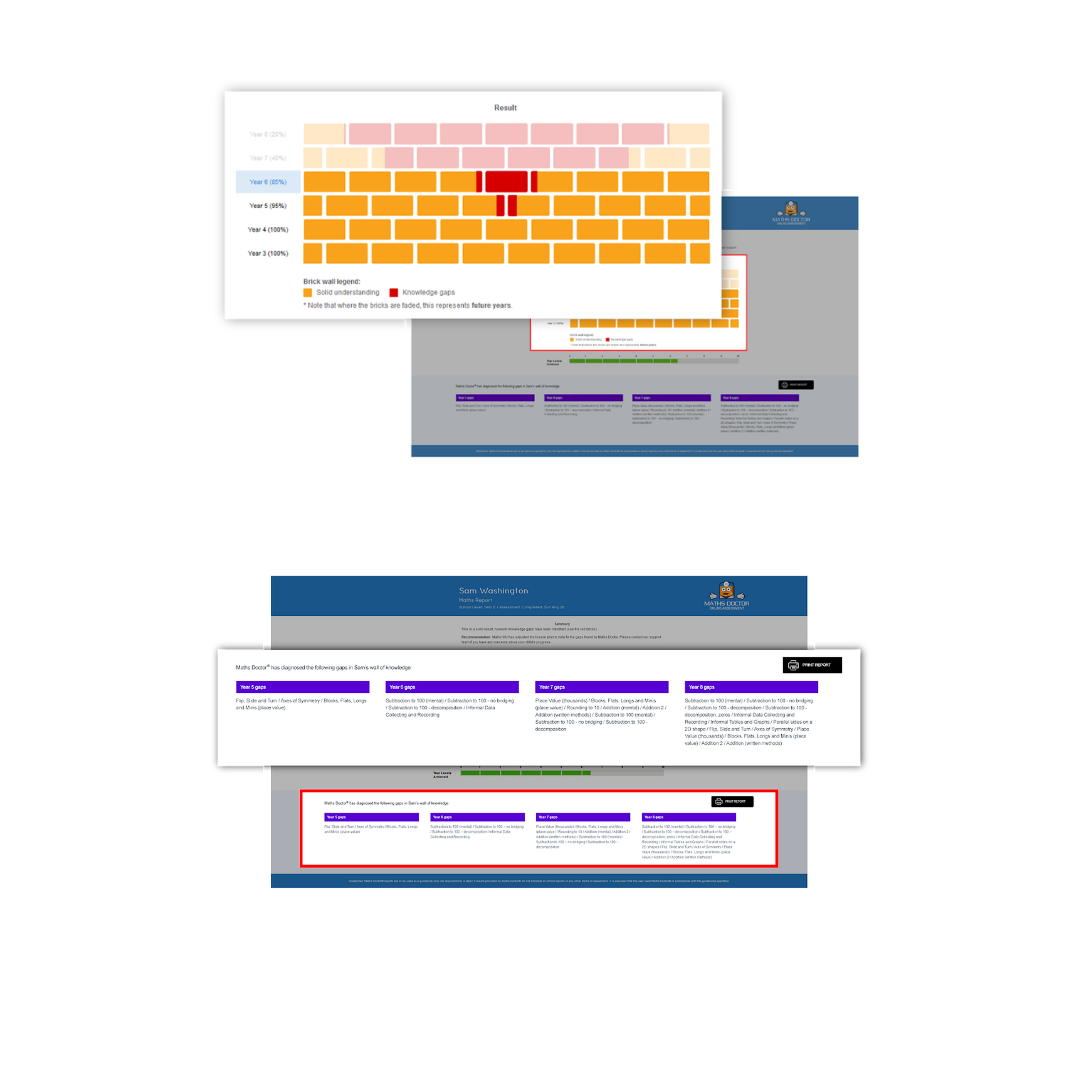
When your child gets started with Kinetic Education, their first step is completing our Maths Doctor assessment. This checks their maths skills across multiple year levels of the Australian Curriculum, including fractions, decimals and percentages.

The assessment helps us understand their current skills, identify any earlier gaps that may be making these topics more difficult and see where they are ready to move ahead.

It takes up to 45 minutes and gives us a clear starting point for your child’s personalised weekly learning plan. From there, we can strengthen the right foundations while helping them continue working through the curriculum at a pace that suits them.

Personalised learning

At Kinetic Education, algebra concepts are included in your child’s personalised learning plan from the very beginning, as part of their maths support aligned to the Australian Curriculum. Here is how it works:

Every Monday, we update your child’s learning plan with new maths activities for the week, selected around their assessment results and progress. Their learning plan moves through three stages: Revision and Catch-Up, Consolidation, and Extension.


Skip to end of cards

Revision and Catch-Up

When your child first starts with Kinetic Education, their learning plan targets the knowledge gaps identified in their assessment. This may mean revisiting earlier fractions, decimals or percentages skills and strengthening the foundations they need before moving into more complex work.

Consolidation

As your child builds their understanding, their learning plan continues to reinforce the skills they are currently working on. Regular practice helps them use maths skills across the curriculum, including fractions, decimals and percentages, with more confidence and apply what they have learned to different types of questions.

Extension

When your child is ready to move ahead, their learning plan introduces more challenging maths across the curriculum, including fractions, decimals and percentages. This helps them extend their understanding, build confidence and apply their skills to more complex questions and real-world maths.

Personalised Learning with Real Tutor Support

Our interactive lessons break each idea into clear, manageable steps using pictures, animations, text and audio. Your child can build algebra skills from early patterns through to Year 12 concepts, including expressions, equations, graphs and more advanced algebra.

If your child needs extra help, their tutor can step in. Using screen sharing and a digital whiteboard, tutors can walk through algebra questions in real time. Tutor support is available after school, Monday to Thursday, up to 10 hours per week, at no extra cost.

Parent Support: You do not have to wonder how your child is going. Each week you receive a report showing what your child has worked on and how they are progressing, and you can call the Parent Helpline to speak directly with their tutor.


Trusted by 100,000+ Australian Families

Rewards

Every activity your child completes earns points they can save and swap for real rewards, including Smiggle, Myer and WISH gift cards. For children who have found maths hard, that extra bit of motivation makes a real difference to consistency.

Pricing

Algebra is included as part of Kinetic Education’s maths support. Starting from $29 per week for the family, Kinetic Education includes the full Australian Curriculum assessment, a personalised weekly learning plan, access to all lessons and activities, tutor support up to 10 hours per week, weekly progress reports and the Parent Helpline. New families receive their first two weeks free.

FAQs

At what age do children start learning algebra?

Algebra starts earlier than most parents realise. From Foundation, children work with patterns and missing numbers, which are the first algebra skills. It becomes more formal in Year 7, when letters are used to stand for unknown values.

My child is in Year 8 and lost with equations. Where do you start?

We start with the assessment. Trouble with equations often traces back to an earlier idea, such as the meaning of the equals sign or working with negative numbers. The learning plan addresses that first, then builds back up to where your child is at school.

Is algebra the same in every state? 

Yes. Algebra is part of the Australian Curriculum, which is followed across the country, so the core skills are the same wherever your child goes to school. Senior subject names can vary by state, but the foundations in Years 2 to 10 are shared.

How is algebra taught in the lessons? 

Each idea is broken into clear steps using animations, pictures, text and audio, with a mix of question types and instant feedback. When your child needs more, their tutor can explain it a different way using screen sharing and a digital whiteboard.

How much does it cost? 

Kinetic's maths support covers algebra alongside the other key areas of the Australian maths curriculum. It starts from $29 per week for the family, and your first two weeks are free.

Can I speak to someone about my child's specific needs before getting started? 

Yes. When you book your free demonstration, we’ll chat about how your child is currently going with their learning, what they’re finding difficult and how Kinetic Education could support them.

Get Your First 2 Weeks Free

Start today with your free demonstration

  • Personalised lessons in Maths & English
  • Live Australian tutors
  • Fun rewards to keep kids motivated as they learn
  • From just $29/wk for the family*

Limited Spots

* By entering your details, you give Kinetic Education permission to contact you to discuss its tutoring via phone and/or email and record such communication for training and compliance purposes. You understand that the 2 weeks free tutoring is only available to children that have not previously received any free tutoring from Kinetic Education.